

FIFA Beyond Football

Credit: The White House
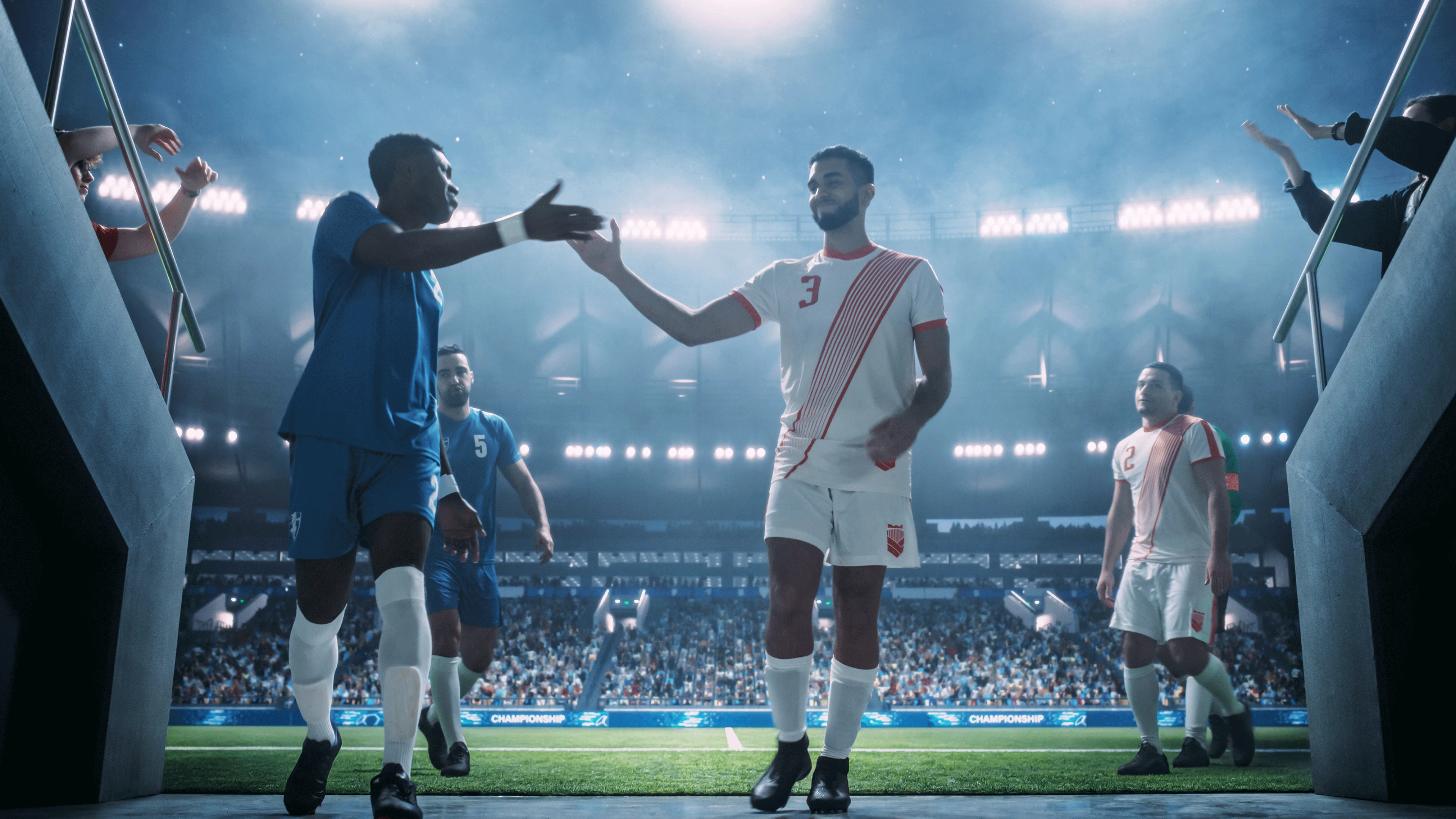
For the United States, the 2026 FIFA World Cup was not simply a sporting spectacle. It was also an economic event that converted global attention into measurable commercial activity.
According to a study conducted by Boston Consulting Group and the U.S. Soccer Federation, hosting 78 matches generated an estimated $17.2 billion in direct and indirect economic output, adding roughly 0.06% to the nation’s $28 trillion GDP. While that increase was modest at the national level, its effects were far more pronounced within the economies of the tournament’s host cities.
Thanks to the country’s extensive network of pre-existing NFL and MLS venues, host cities avoided much of the construction debt that has burdened many previous World Cup hosts. Instead, visitor spending flowed directly into hotels, restaurants, transportation, retail, and other local businesses, allowing communities to capture a greater share of the tournament’s economic benefits.

During the FIFA World Cup group stage, consumer spending in host cities increased 6.3% year-over-year, driven primarily by non-local visitors, whose spending rose 16.7%, according to Bank of America Institute data.
Foreign tourists spent an estimated $2,850 to $5,000 per stay, while individual host cities captured between $160 million and $620 million in net economic activity. Although the gains varied from city to city, the tournament demonstrated how a major international sporting event can stimulate local economies through tourism, consumer spending, and broader business activity.
The 2026 FIFA World Cup showed that global sporting events can be powerful economic drivers. When the right infrastructure is already in place, the benefits extend far beyond the final whistle.
- A. R. Aniket Shafin.
The MOU Collapse

“Iran says it is no longer bound by key commitments.”
Iran released a statement on the 18th of July declaring that they themselves are not bound to follow the MOU commitments. Iranian officials stated that this was due to “US failure in its own commitments.” There was a debate whether the MOU would be a lasting solution, but it has proven that it was not. Iran has warned nations hosting US forces to prepare for retaliation, meaning that the end of this conflict is still up in the air, with both sides continuing to attack each other. As for the Gulf states and the larger global oil market trends the volatility continues as long as this conflict continues, with oil going to about $84 a barrel. This conflict has resulted in 14 US service members' deaths and 427 wounded, and Iran has at least 50 deaths and many more injured.
- Jayden Wielgosz
American Independence

John Trumbull's painting, Declaration of Independence.
On July 4th, 1776, the Second Continental Congress formally adopted he declaration of Independence, announcing that the thirteen American colonies considered themselves free from British rule. The vote to declare independence actually happened two days earlier on July 2nd, but the ratification of the document is what we remember.
The famous signing moment most of us picture with the delegates lined up to add their names did not happen all at once, either, as most signatures were added over the following weeks and months. Independence Day did not become a federal holiday until 1870, nearly a century later. The idea and experiment of the American nation still endures today, continuing to change and innovate.
- Jayden Wielgosz
Exclusive Interview with Rob Shull

Leadership, according to Rob Shull, begins with service. During our interview, the United States Army veteran and recipient of the Army Achievement Award said the greatest lesson he learned from military service was the importance of servant leadership. He often refers to the saying, “leaders eat last,” explaining that a good leader places the needs of others before their own. That principle, he said, continues to guide his work in Burlington Township today.
Shull also spoke about founding Men of Action Burlington County, a nonprofit organization committed to serving the community through practical volunteer work. The organization assists elderly residents, helps single mothers, and responds to local needs through projects that strengthen neighborhoods. Rather than waiting for someone else to solve problems, Shull explained, Men of Action encourages ordinary citizens to step forward and make a difference through service.
When asked where citizens can have the greatest impact, Shull emphasized the importance of local politics. He noted that while national issues often dominate headlines, the decisions made by local officials directly affect residents’ daily lives. He encouraged younger generations to become more involved in their communities by learning about local issues, supporting causes they believe in, and participating in civic life.
Shull also highlighted one of Men of Action’s signature programs, Teach a Kid How to Fish, an annual event open to children ages 4 to 17. The program provides fishing equipment, safety gear, and experienced mentors while giving young people the opportunity to learn a new skill, spend time outdoors, and build confidence. For Shull, investing in the next generation through service and mentorship remains one of the most meaningful ways to strengthen the community.
Opinion : The United States Will Return to Its Rightful Position as the World's Only True Superpower

Credit: New York Times
Strategic foresight in the current geopolitical energy crisis reveals a layered set of plays that position the United States with decisive leverage. Recent international developments, such as the disruptions in the Strait of Hormuz and the Iran conflict, have significantly affected China’s crude imports. While China’s imports have been cut by 44%, not by choice, but through enforced supply constraints, U.S. Gulf exports have hit records. This situation raises the question of whether this is merely reactive chaos or a calculated strategy to preserve energy superiority and counter rival blocs.
The sequence of events is clear. Foundational understandings reached prior with Russia, Gulf producers, and Israel have created alignment. Venezuela’s refusal to cooperate has led to resource consolidation. Cuba’s resistance has resulted in a blockade and the precision extraction of leadership figures by elite units. Iran’s non-cooperation has forced the closure of the Strait of Hormuz, projecting fuel exhaustion for Europe in five weeks, near-term diesel shortages in Australia, and over 50% energy loss for China. The United States now controls the sole “on” switch, which is a significant advantage. Even the most left-wing Americans will have to secretly agree with this while vehemently criticizing it as racist or something similar.
Restoration or sustained blockade grants the United States unmatched negotiating power, compelling Iran to minimal terms and enabling American oversight of the chokepoint.
This strategic architecture appears two steps ahead. Short-term optics may mask long-term supremacy. Anticipated outcomes include gasoline prices at $1.50–$1.90 by November 1, a surge in jobs, reversed inflation through targeted price stabilization, and renewed economic expansion. However, liberal-led states resisting the rebound will stand further exposed. This framework secures sole superpower status, successor strength (potentially elevating figures like Hawley), and compels UN reform or dissolution if dues go unpaid. Every level of the plan aligns, and it executes precisely. The liberal new world order is effectively dead. America is, dare we say, great again?
- Rob Shull
.jpg/_jcr_content/renditions/original)